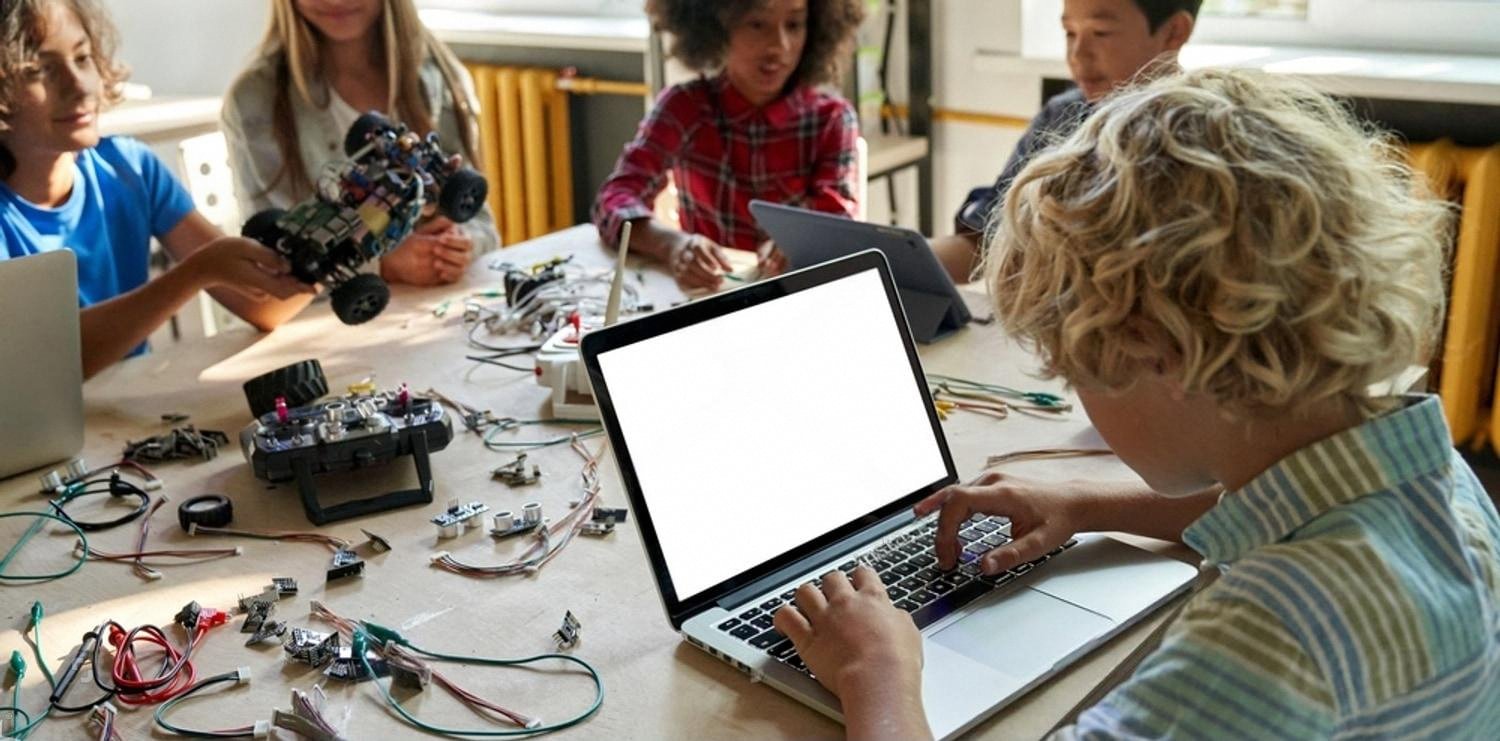
Comprehensive child development is the idea that a child grows best when several parts of life are cultivated at the same time: academic study, physical activity, scientific curiosity and creative expression. In the UAE, where families often juggle demanding school curricula alongside a busy calendar of clubs, sports academies and cultural programs, this balance is not a luxury. It is what turns a good student into a capable, adaptable young person who can handle real situations outside the classroom.
Knowledge is only one ingredient. A child who reads well but cannot lose a football match without falling apart, or who scores top marks but has never built anything with their hands, is still missing pieces. The four areas below work together, each covering a gap the others leave open.
Foundation
Study: the base every other skill sits on
Formal study gives a child the language, numeracy and reasoning tools they need to make sense of everything else. In UAE schools, the mix of English, Arabic, mathematics and sciences builds a solid academic spine, but the real value shows up when a child learns how to learn: how to sit with a difficult problem, how to break it apart, how to ask for help without shame.
- Reading habits that go beyond textbooks and into fiction, biographies and news.
- Structured problem-solving practised on maths and science tasks.
- Language fluency in more than one tongue, which is normal in the Emirates.
- Concentration built through steady daily practice rather than last-minute cramming.
Study alone, though, can leave a child physically weak, socially thin and creatively bored. That is where the other three pillars come in.
Body and mindset
Sports: endurance, teamwork and everyday resilience
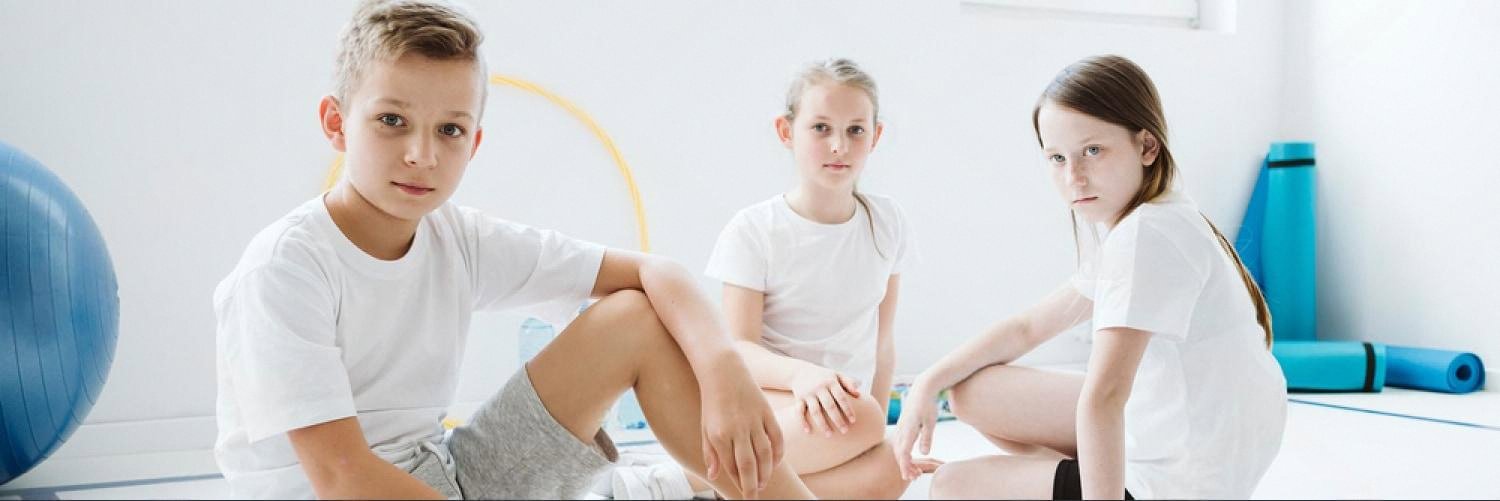
Sport is not a break from serious development. It is serious development. When a child trains regularly, whether that is swimming in a Dubai club, football at a school academy in Abu Dhabi or padel with friends on a Friday evening, they build things you cannot teach from a book.
- Stamina and stronger muscles, which support posture and concentration in class.
- Goal-setting: shaving a second off a lap time, finishing a longer run.
- Teamwork, negotiation and learning to lose without giving up.
- Regular endorphin release, which supports mood and sleep quality.
The World Health Organization recommends children aged 5 to 17 get an average of 60 minutes of moderate to vigorous physical activity every day. In a country where summer heat pushes families indoors for months, planning that hour deliberately, through indoor courts, pools and gyms, matters more than in cooler climates.
A child who has learned to keep going after a lost match will keep going after a failed test. The muscle is the same one.
Curiosity
Science: seeing how the world is actually put together
Science activities, whether it is a home experiment with vinegar and baking soda, a robotics club, or a visit to a place like the Museum of the Future in Dubai, do something classroom lessons rarely manage: they let a child see cause and effect happen in front of them. That direct contact with how the world works turns abstract facts into intuition.
- Observation. Children learn to notice small differences and describe them accurately.
- Hypothesis. They guess what will happen next, and are allowed to be wrong.
- Experiment. They try it. The result is not judged, only measured.
- Revision. They adjust their thinking based on what actually happened.
This loop is exactly how adult scientists work, and it is one of the most transferable habits a child can carry into any career, from medicine to running a business.
Expression
Creativity: music, art and the freedom to make something new
Music lessons, drawing clubs, drama, ceramics and creative writing all give a child a channel that has no single correct answer. That is rarer than it sounds. Most of a child’s day is spent being marked right or wrong. Creative work is where they get to make choices that are simply theirs.
- Emotional literacy: naming feelings through colour, sound or story.
- Fine motor skills developed through drawing, playing an instrument or working with clay.
- Confidence that comes from finishing and showing your own work.
- Cultural awareness, especially valuable in a country as international as the UAE.
Many families in the Emirates supplement school through structured extracurricular activities in Dubai mixing arts and sciences so a child does not have to choose between the two too early.
The sequence of comprehensive development, in five ideas
- Start with routine. Sleep, meals and study time form the container everything else fits into.
- Add movement daily. Even 30 to 60 minutes of active play changes mood, focus and appetite.
- Introduce curiosity projects. One small experiment, build or observation each week.
- Protect creative time. An instrument, a sketchbook or a story kept up over years, not weeks.
- Review together. Talk with the child about what they liked, what was hard, what they want to try next.
What each pillar contributes: a quick reference
| Pillar | Main skill it builds | Typical UAE options | Recommended weekly time |
|---|---|---|---|
| Study | Reasoning, literacy, focus | School curriculum, tutoring, reading clubs | School hours plus 4 to 7 hours homework |
| Sports | Endurance, teamwork, resilience | Football, swimming, gymnastics, padel, martial arts | 3 to 5 sessions, around 60 minutes each |
| Science | Observation, logical reasoning, curiosity | Robotics clubs, coding, museum visits, home experiments | 1 to 2 sessions per week |
| Creativity | Emotional expression, fine motor skills, confidence | Music school, art studio, drama, creative writing | 1 to 3 sessions per week |
The exact hours matter less than the fact that all four columns appear somewhere in the week. A child who touches each area regularly grows in a way that a child pushed hard on only one never quite matches.
Frequently asked questions
At what age should a child start extracurricular activities?
Most children can benefit from light structured activity from around age three or four, starting with playful movement, music and drawing. Serious skill-building, such as competitive sports or a chosen instrument, usually fits better from age six or seven onwards. The key is to keep it playful for as long as possible so the child associates learning with enjoyment.
How many activities are too many for one child?
Watch for sleep, appetite and mood before counting sessions. A calm, well-rested child doing five activities per week is fine. A tired, irritable child doing two is doing too much.
A useful rule is to leave at least two afternoons per week completely free for unstructured play, rest and family time. Downtime is where children process what they have learned.
What if my child dislikes sport?
Try widening the definition. Team sports like football are not the only option. Swimming, cycling, martial arts, dance, climbing walls and even active outdoor games all count. In the UAE, indoor facilities make year-round activity realistic even during summer heat.
The aim is regular movement, not a trophy shelf. If a child finds one activity they enjoy enough to keep doing, that is a success.
Can science and creativity really be developed together?
Yes, and often more effectively than separately. Building a small robot, designing a game, filming a short video or writing a story about an invention all combine logical structure with creative choices. Many schools in the UAE now run STEAM programs (science, technology, engineering, arts, mathematics) built around exactly this overlap.
How can working parents in the UAE fit all this in?
Use the school day as the base and pick two or three anchor activities per week outside it, rather than trying to schedule something every afternoon. Weekends work well for longer sessions like swimming, family museum visits or art classes.
Carpooling with other families, choosing venues close to home or work, and mixing in shorter home-based experiments and reading time all help keep the load manageable.
Do academics suffer when children spend time on sports and hobbies?
The opposite is more common. Regular physical activity and creative outlets tend to improve concentration, sleep and mood, which in turn support academic performance. Problems appear when a child is overscheduled and chronically tired, not when they have balanced hobbies.

Skydiver, vegan, hiphop head, International Swiss style practitioner and AIGA member. Performing at the fulcrum of design and function to save the world from bad design. I am 20 years old.